
Disclosure: This guide has affiliate links — if you buy through one we may earn a small commission at no extra cost to you. Our picks are our own, ranked on merit. Full disclosure. This is buying advice, not medical advice — for therapy questions, talk to your physician or equipment provider.
A CPAP is the rare gadget where "the battery died overnight" isn't an annoyance — it's a night of untreated apnea. So this guide ranks portable power stations on the only thing that matters here: how many real hours they'll run your machine, with your settings, not the rosy number on the box. Short version — if you want one unit that covers a home outage, a long weekend and even two machines for a couple, get the Anker SOLIX C1000 (1,024Wh, pure sine wave, near-instant UPS). For travel and camping the C300X (288Wh) is the smallest sensible pick, and for RV life the C2000 Gen 2 with its 30-amp outlet is the one. We've kept it honest: Jackery's Explorer 300 Plus is the only unit here with a manufacturer-published CPAP runtime, and EcoFlow's DELTA 3 undercuts the C1000 on price and noise — both are in the table and the picks. But before any of that, read the next section. Four settings decide whether a power station gets you to morning, and most buyers learn them the hard way.
- Best overall (home + couples): Anker SOLIX C1000 — 1,024Wh, pure sine wave, sub-10ms UPS, runs a humidifier-off CPAP roughly 20 hours and can power two machines a night. Expandable when you need more.
- Best for travel / smallest: Anker SOLIX C300X (288Wh) — about one humidifier-off night, ~10ms UPS, near-silent. Note: it's over the 100Wh airline carry-on limit, so it flies only with airline approval.
- Best for RV / van life: Anker SOLIX C2000 Gen 2 — 2,048Wh, a true TT-30 30-amp RV outlet, expandable to 4,096Wh. (It's the value play over the older, pricier F2000.)
- Best budget + the only published runtime: Jackery Explorer 300 Plus — $299.99, and Jackery actually states it: ~8.1 hours for a 30W CPAP, ~4.7 hours at 40W.
- The thing nobody tells you: turning the heated humidifier on can roughly halve your runtime, and running the CPAP off a 12V DC cable instead of the AC outlet gets you ~15–30% more. Those two choices matter more than which brand you buy.
The four settings that decide if you make it to morning
You can buy the "right" power station and still wake up to a dead machine if you get these wrong. This is the part the spec sheets skip.
1. The heated humidifier is the runtime killer. A CPAP blower alone sips power — a ResMed AirSense 10 pulls about 7W with the humidifier off. Switch the humidifier on and it jumps to ~22W; add the heated tube and it's ~34W. That's a 3–5× swing on one machine, and it roughly halves (campers report up to 70–80% loss) how many nights a battery gives you. The fix most people land on: run the humidifier "dry" — water in the chamber, heater off — to keep some moisture without the power cost. We dig into the math in will 288Wh run a CPAP all night?
2. DC beats the AC outlet by 15–30%. Your CPAP actually runs on DC. Plug it into the power station's AC wall outlet and the unit converts DC→AC→DC, bleeding 15–30% as heat. Run it instead from a 12V DC car-style port with the right cable and you reclaim most of that — sometimes the difference between one night and two. The catch: ResMed's AirSense machines use a proprietary connector and usually need a ~$300 DC converter, so confirm a DC option exists for your model before counting on it.
3. "Eco mode" can shut your CPAP off at 3am. Between breaths a CPAP idles below ~10W, and many power stations read that as "nothing plugged in" and cut the AC outlet to save power. People discover this by waking up to a silent machine. Before you trust any unit overnight, disable its eco/auto-shutoff (on Jackery it's a long-press of AC + power; on EcoFlow it's an app toggle), or keep a small dummy load plugged in to hold the port awake.
4. Pure sine wave is non-negotiable. A CPAP motor — and especially the heated humidifier — wants clean, grid-like power. A cheap "modified sine wave" inverter can buzz, throw error codes, or damage the humidifier. Good news: every unit in this guide is pure sine wave, so you can stop worrying about it as long as you stick to these picks.
The best CPAP power stations, compared
| Power station | Best for | Capacity | UPS switchover | Est. CPAP runtime* | Price |
|---|---|---|---|---|---|
| Anker SOLIX C1000 | Home backup + couples | 1,024Wh | Sub-10ms | ~20 hrs (humidifier off) | ~$799 |
| Anker SOLIX C800 | A week of camping | 768Wh | <20ms | ~10 hrs | ~$599 |
| Anker SOLIX C300X | Travel / smallest | 288Wh | ~10ms | ~8 hrs @30W | ~$299.99 |
| Anker SOLIX C2000 Gen 2 | RV / van life | 2,048Wh | 10ms | Multiple nights | ~$799.99 |
| Jackery Explorer 300 Plus | Budget + known runtime | 288Wh | EPS (not true UPS) | 8.1 hrs @30W (stated) | ~$299.99 |
| EcoFlow DELTA 3 | Value alternative to C1000 | 1,024Wh | <10ms | ~20 hrs (humidifier off) | ~$699 |
*No manufacturer except Jackery publishes an official CPAP runtime, so every other figure here is an estimate from capacity and typical draw, before inverter losses. Treat them as planning numbers, test your own setup, and re-check prices — they move with sales. Now, the picks.
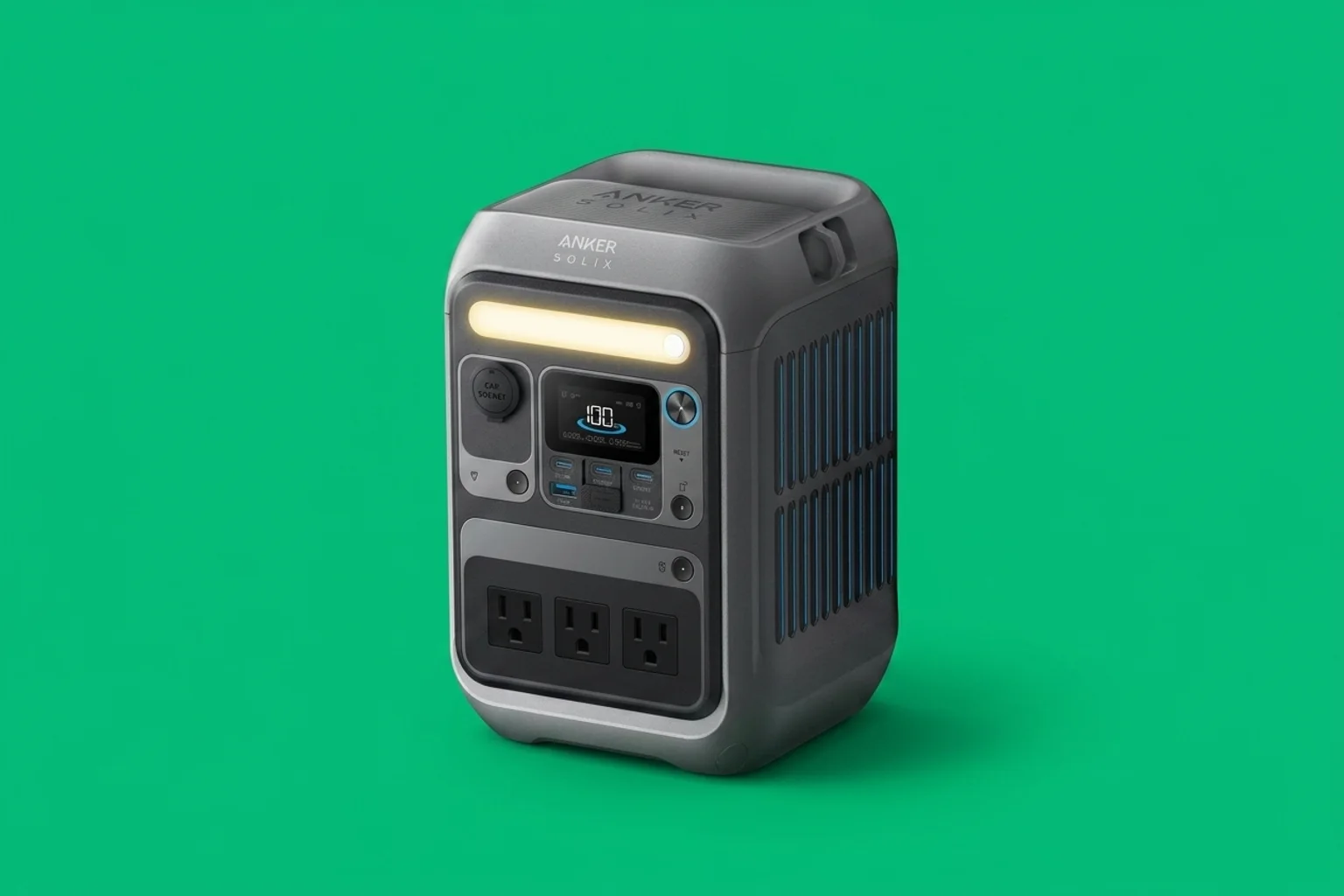
1. Anker SOLIX C1000 — best overall for home backup
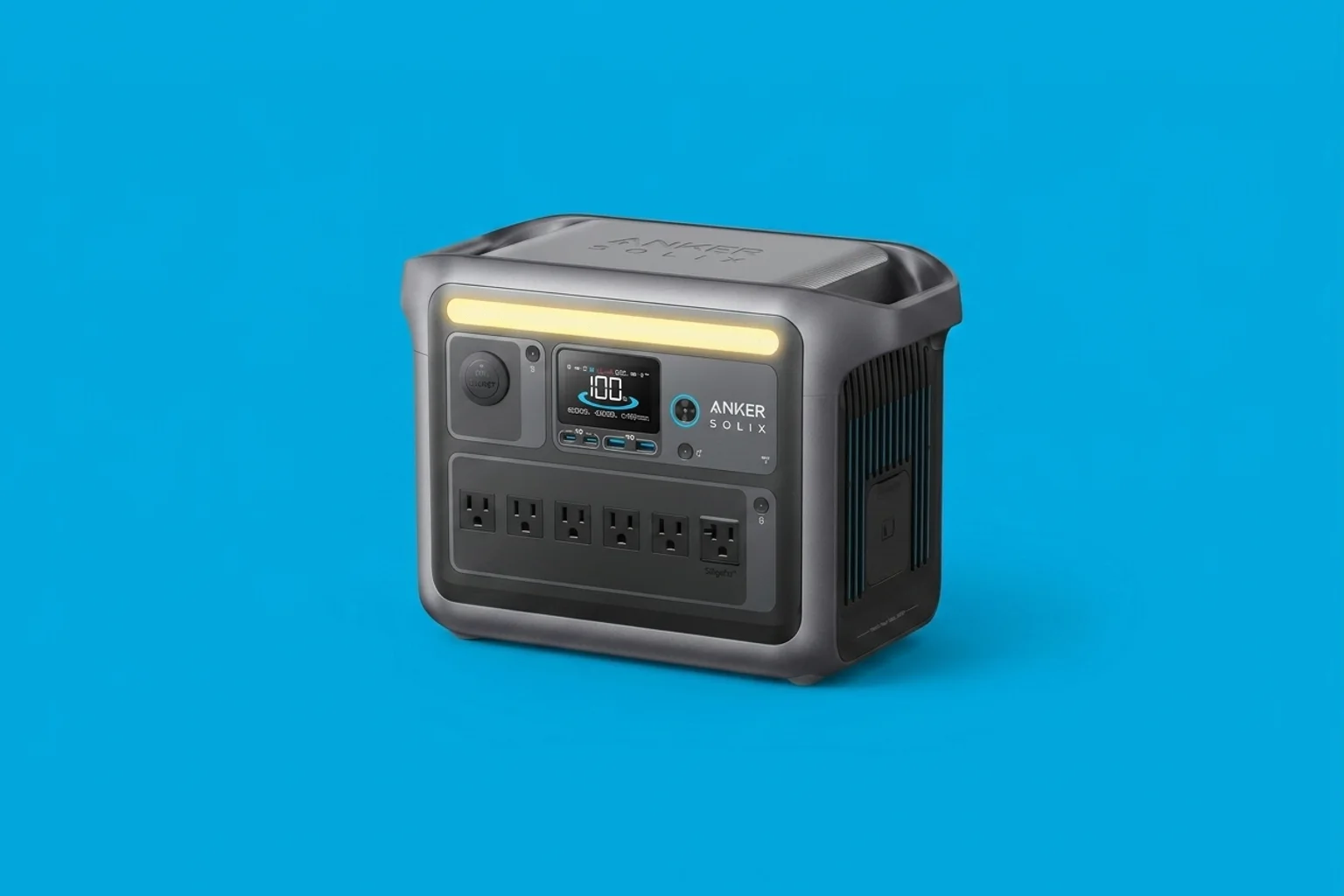
Anker SOLIX C1000
The one to buy if you want a single unit for power-outage backup that can also travel. Pure sine wave, a sub-10ms UPS so the machine never blinks during a blackout, and enough capacity to run two CPAPs through the night.
Check price at Anker →For the most common reason people buy one of these — a backup that keeps the CPAP running when the grid drops — the C1000 is the easy call. Its UPS switchover is under 10 milliseconds, faster than a blink, so a blackout doesn't restart your machine or wake you. The 1,024Wh LiFePO4 battery runs a humidifier-off CPAP somewhere around 20 hours — two to three nights, or a single night with the humidifier on and a comfortable margin. A couple can run two machines off it. It's pure sine wave, it recharges flat-to-full in about an hour, and it's expandable if you later want multi-night coverage. LiFePO4 cells mean ~3,000 cycles, so nightly use won't wear it out for years.
The honest flaw: it's not silent. Under a light CPAP load it's quiet (~35 dB), but the fan ramps up hard during fast wall charging — loud enough that reviewers warn against recharging it next to the bed overnight. The workaround is built in: use the Anker app to throttle the charge rate, and charge it during the day. It's also heavier (~28 lb) than a comparable Jackery, and Anker's firmware update flow wants an account login. None of that undercuts the core job — for a stay-at-home medical backup that occasionally travels, it's the best balance of clean power, instant switchover and capacity here. If price and noise are your priority, read the EcoFlow DELTA 3 pick below; it's the C1000's closest rival.
Pros
- Sub-10ms UPS — CPAP never reboots during an outage
- ~20 hrs humidifier-off runtime; powers two machines a night
- Pure sine wave, ~1-hour recharge, expandable, ~3,000-cycle LiFePO4
- App lets you cap charge wattage to keep it quiet
Cons
- Fan is loud during fast charging — don't recharge it bedside
- Heavier than a same-capacity Jackery (~28 lb)
- Firmware updates want an account login
- No manufacturer-published CPAP runtime (none of these but Jackery have one)
2. Anker SOLIX C800 — best for a week of camping
Anker SOLIX C800
The carry sweet spot: enough battery for several humidifier-off nights at a weight (~24 lb) you'll actually lug to a campsite, with a fast UPS and solar input for longer trips.
Check price at Anker →If your use is camping rather than home backup, the C800 hits the right balance. Its 768Wh pack runs a humidifier-off CPAP roughly 10 hours — call it a couple of nights at modest pressure, or one comfortable night with the humidifier on — and at about 24 lb it's genuinely carryable, which the bigger units aren't. It's pure sine wave, has a sub-20ms UPS, charges fully in under an hour on the wall, and takes up to 300W of solar so you can top it back up between nights off-grid. Five AC outlets and a 12V car port give you a DC path for the CPAP if your machine supports it.
The trade-offs are mild. There's no expansion battery, so 768Wh is the ceiling — fine for a long weekend, tight for a week with the humidifier running. Anker has begun replacing it with the newer C800X, so check which one is in stock and at what price. And like every unit here, standard (quiet) charging is much slower than the headline fast-charge number. For a once-or-twice-a-year camper who wants real nights without a back-breaking unit, it's the pick.
Pros
- ~24 lb — the carry sweet spot for camping
- 768Wh ≈ a couple of humidifier-off nights; pure sine
- Sub-20ms UPS, ~1-hour fast charge, 300W solar input
Cons
- Not expandable — 768Wh is the hard ceiling
- Being superseded by the C800X; watch stock/price
- Quiet charging is slow; fast charging is louder
3. Anker SOLIX C300X — best for travel
Anker SOLIX C300X (AC)
The lightest unit that can still run a wall-plug CPAP cleanly — about one humidifier-off night, near-silent at 25 dB, with a real UPS. Just don't expect a humidified night out of it.
Check price at Anker →When the priority is small and light — a hotel, a tent, a single night's backup — the C300X is the floor that still works. It's pure sine wave, runs near-silent at about 25 dB (you can sleep next to it), and offers a ~10ms UPS plus a 140W USB-C port. The 288Wh battery covers roughly one full night with the humidifier off (about 8 hours at a 30W draw), which is exactly what a low-pressure traveler needs.
Two honest cautions. First, buy the C300X "AC" version, not the C300 DC Power Bank — the DC-only model has no AC inverter at all and can't run a standard wall-plug CPAP. Second, at 288Wh this unit is roughly one humidifier-off night; switch the humidifier on and you won't make it to morning, so plan to run dry or size up to the C800. And because it's over the 100Wh airline carry-on limit, it can't fly freely — 101–160Wh needs airline approval, and you can't check it. For road trips and tent camping it's ideal; for frequent flying, a sub-100Wh dedicated CPAP battery is the better tool.
Pros
- ~8 lb and near-silent (25 dB) — true bedside unit
- Pure sine, ~10ms UPS, 140W USB-C
- About one humidifier-off night for a low-pressure traveler
Cons
- Too small for a humidified full night — plan to run dry
- Over 100Wh, so it can't fly carry-on without airline approval
- Get the "AC" model — the C300 DC Power Bank can't run an AC CPAP
4. Anker SOLIX C2000 Gen 2 — best for RV and van life
Anker SOLIX C2000 Gen 2
The rig-friendly pick: 2,048Wh, a true 30-amp TT-30 outlet so your shore cord plugs straight in, expandable to 4,096Wh, and a quiet 30 dB at the low loads a CPAP pulls. The smart-money choice over the pricier F2000.
Check price at Anker →For boondocking with a CPAP, capacity and the right outlets win, and the C2000 Gen 2 has both. The 2,048Wh battery runs a humidifier-off CPAP for multiple nights, it's expandable to 4,096Wh for a week off-grid, and it has a real TT-30 30-amp RV outlet so you can plug a 30-amp shore cord straight in instead of running per-appliance extension cords. It idles at just 9W and stays quiet (~30 dB) at CPAP-level loads, with a 10ms UPS for outages. Pure sine wave throughout.
Two things to keep honest. A TT-30 outlet does not mean 3,600 watts on tap — the inverter's 2,400W continuous ceiling is the real limit, so don't expect to run a rooftop air conditioner and a coffee maker at once. And the older Anker F2000 (PowerHouse 767) gives you the same 2,048Wh and TT-30 outlet for about $1,999 — roughly $1,200 more for last-generation internals. Unless you find the F2000 deeply discounted, the C2000 Gen 2 is the obvious buy. We'll go deeper on RV power in a dedicated guide; for now, this is the unit.
Pros
- 2,048Wh, expandable to 4,096Wh — multi-night CPAP off-grid
- True TT-30 30-amp RV outlet; 9W idle, ~30 dB quiet
- Pure sine, 10ms UPS; ~$1,200 cheaper than the F2000 for the same capacity
Cons
- 2,400W continuous ceiling — a TT-30 jack isn't a full 30 amps of power
- Heavy (~42 lb) — a haul to move around camp
- Overkill (and overweight) if you only need a single travel night
5. Jackery Explorer 300 Plus — best budget, and the only published runtime
Jackery Explorer 300 Plus
The honest budget pick — and the only unit here whose maker actually publishes a CPAP runtime: ~8.1 hours at 30W, ~4.7 hours at 40W. Quiet, light, pure sine, with a true silent charging mode.
Check price on Amazon →We're not going to pretend Anker is the only good answer. The Jackery Explorer 300 Plus is the same 288Wh class as the C300X, costs about the same, and does one thing none of the Ankers do: Jackery publishes the CPAP runtime — roughly 8.1 hours for a 30W machine and 4.7 hours at 40W. That transparency is worth a lot when you're sizing for a medical device. It's pure sine wave, light (~8.3 lb), and has a genuinely quiet "silent charging" mode under 45 dB, which matters bedside.
Where it slips behind the C300X: it relies on EPS rather than a true zero-gap UPS, so confirm the switchover behavior before trusting it as an always-on outage backup; it's not expandable; and it's the same one-humidifier-off-night capacity, so the humidifier still has to come off for camping. If you want the cheapest pure-sine unit with a maker-stated runtime and don't need instant UPS, it's the value pick — and a brand we're happy to recommend over a pricier Anker when it's the better fit.
Pros
- Manufacturer-published CPAP runtime (8.1 hrs @30W) — rare honesty
- $299.99, ~8.3 lb, pure sine, quiet silent-charging mode
- LiFePO4 with 1,500+ cycles
Cons
- EPS, not a true zero-gap UPS — verify before relying on it for outages
- Not expandable; 288Wh is one humidifier-off night
- Confirm Plus (LiFePO4) — Jackery's Classic/Pro lines use older chemistry
6. EcoFlow DELTA 3 — the value alternative to the C1000
EcoFlow DELTA 3
The same 1,024Wh class as the C1000 for about $100 less, quieter at CPAP loads, with a sub-10ms UPS and expandability to 5,120Wh. The pick if price and bedside noise matter most.
Check price at EcoFlow →If the C1000's only real flaws are price and fan noise, the DELTA 3 is the answer to both. It's the same 1,024Wh, pure sine wave, with a sub-10ms UPS — and it runs quieter at the low wattage a CPAP pulls (under 30 dB at light loads), which is the difference next to a light sleeper. It's typically about $100 cheaper than the C1000, expands to 5,120Wh for serious off-grid use, charges flat-to-full in under an hour, and its X-Boost mode stretches usable output to 2,200W. For a CPAP, it does everything the C1000 does, a little quieter and a little cheaper.
The honest counterweight: EcoFlow's reputation has dings. A different model — the Delta Max 2000 — had a 2026 overheat/fire recall, and some owners report firmware-update friction. Its app is powerful but occasionally buggy. None of that is specific to the DELTA 3, but it's why we don't reflexively rank it first. Cross-shop it directly against the C1000 — we'll be publishing that head-to-head — and pick on price, noise tolerance and which app ecosystem you'd rather live in.
Pros
- Same 1,024Wh as the C1000 for ~$100 less
- Quieter at CPAP loads (<30 dB); sub-10ms UPS
- Expandable to 5,120Wh; ~1-hour recharge; X-Boost to 2,200W
Cons
- Brand has had a recall (different model) and firmware-update gripes
- Powerful app can be buggy
- No published CPAP runtime (only Jackery states one)
How to size it to your machine and your nights
Two quick filters get you to the right capacity.
Start with your machine and your humidifier. A low-draw machine run dry (no humidifier) is the easy case — a 288Wh unit like the C300X or Jackery 300 Plus covers a night. Run the humidifier and heated tube and your draw can triple, so you want a 768Wh C800 for a single comfortable night or the 1,024Wh C1000 for two. A thirsty machine like a ResMed AirSense 11 (~56W typical) eats batteries faster — size up a tier. If apnea backup at home is the goal, the C1000's instant UPS is the feature that matters; if it's camping, weight and solar input matter more.
Then match the unit to the trip. One travel night → C300X or Jackery 300 Plus. A long weekend → C800. Home outage backup, or a couple sharing → C1000 (or DELTA 3 for less). Living in an RV → C2000 Gen 2 with the TT-30 outlet. Whatever you pick, do a full dry run at home first: disable eco mode, decide humidifier on or off, and time a real night before you depend on it somewhere with no outlet.
What size power station do I need for a CPAP?
It depends almost entirely on your humidifier. With the humidifier off, a typical CPAP draws around 7–30W, so a 288Wh unit (like the Anker C300X or Jackery Explorer 300 Plus) covers about one night. Turn the heated humidifier and tube on and draw can climb to 22–90W, roughly halving runtime — so step up to a 768Wh C800 for one humidified night or a 1,024Wh C1000 for two. For RV or multi-night off-grid use, look at 2,048Wh and expandable, like the C2000 Gen 2. Always test your exact setup for a full night before relying on it.
Will a portable power station run my CPAP all night?
Yes, if you size it right and run it right. The most reliable way to get a full night is to turn the humidifier off (or run it dry), power the machine from a 12V DC cable instead of the AC outlet where possible, and disable the station's eco/auto-shutoff so it doesn't cut the outlet when the CPAP idles between breaths. A 288Wh unit will do one humidifier-off night; for a humidified night with margin, get 768Wh or more. We break the numbers down in will 288Wh run a CPAP all night?
Do I need a pure sine wave power station for a CPAP?
Yes. A CPAP motor and its heated humidifier want clean, grid-like power. A "modified sine wave" inverter can cause buzzing, error codes, inconsistent pressure, or damage to the humidifier. Every power station in this guide — the Anker SOLIX models, Jackery Explorer 300 Plus and EcoFlow DELTA 3 — is pure sine wave, so it's safe for a CPAP. If you're shopping outside this list, confirm "pure sine wave" before you buy.
Why does my power station shut off in the middle of the night?
Because of eco mode. A CPAP idles below ~10W between breaths, and many power stations interpret that low draw as "nothing plugged in" and switch the AC outlet off to save power — cutting your therapy mid-sleep. The fix is to disable the eco/auto-shutoff setting before you rely on the unit (on Jackery, a long-press of the AC and power buttons; on EcoFlow, a toggle in the app), or keep a small extra load plugged in overnight so the station never idles below its cutoff.
Is it better to run a CPAP on DC or AC?
DC, if your machine supports it. A CPAP runs on DC internally, so feeding it through the power station's AC outlet wastes 15–30% of the battery on conversion. A 12V DC car-style cable matched to your machine reclaims most of that — often the difference between one night and two. The catch: ResMed AirSense machines use a proprietary connector and usually need a ~$300 DC converter, so confirm a DC option exists for your model. If not, the AC outlet works fine — just size the battery a bit larger to cover the loss.
Can I fly with a CPAP power station?
Usually not the camping-sized ones. The TSA carry-on limit is 100Wh per battery without approval; 101–160Wh needs airline pre-approval, and anything over 160Wh is banned, with no batteries allowed in checked bags. That rules out every unit in this guide — even the 288Wh C300X — for free carry-on. For flying, use a dedicated sub-100Wh CPAP travel battery; for road trips and camping, these power stations are the better tool. The CPAP machine itself flies fine as a medical device.
Bottom line: for most people the Anker SOLIX C1000 is the one to buy — clean pure-sine power, a sub-10ms UPS so a blackout never interrupts therapy, and enough capacity for two machines or two to three humidifier-off nights. Travelers should drop to the C300X, campers to the C800, and RV owners to the C2000 Gen 2 with its TT-30 outlet. If budget rules, the Jackery Explorer 300 Plus is the honest value pick with a runtime its maker actually stands behind, and the EcoFlow DELTA 3 is the quieter, cheaper alternative to the C1000. Whatever you choose, the four settings up top — humidifier, DC vs AC, eco mode, pure sine — matter more than the logo. Get those right and you'll sleep through the night, not wake up to a silent machine.