
Disclosure: This review has affiliate links — if you buy through one we may earn a small commission at no extra cost to you. My verdict is my own. Full disclosure.
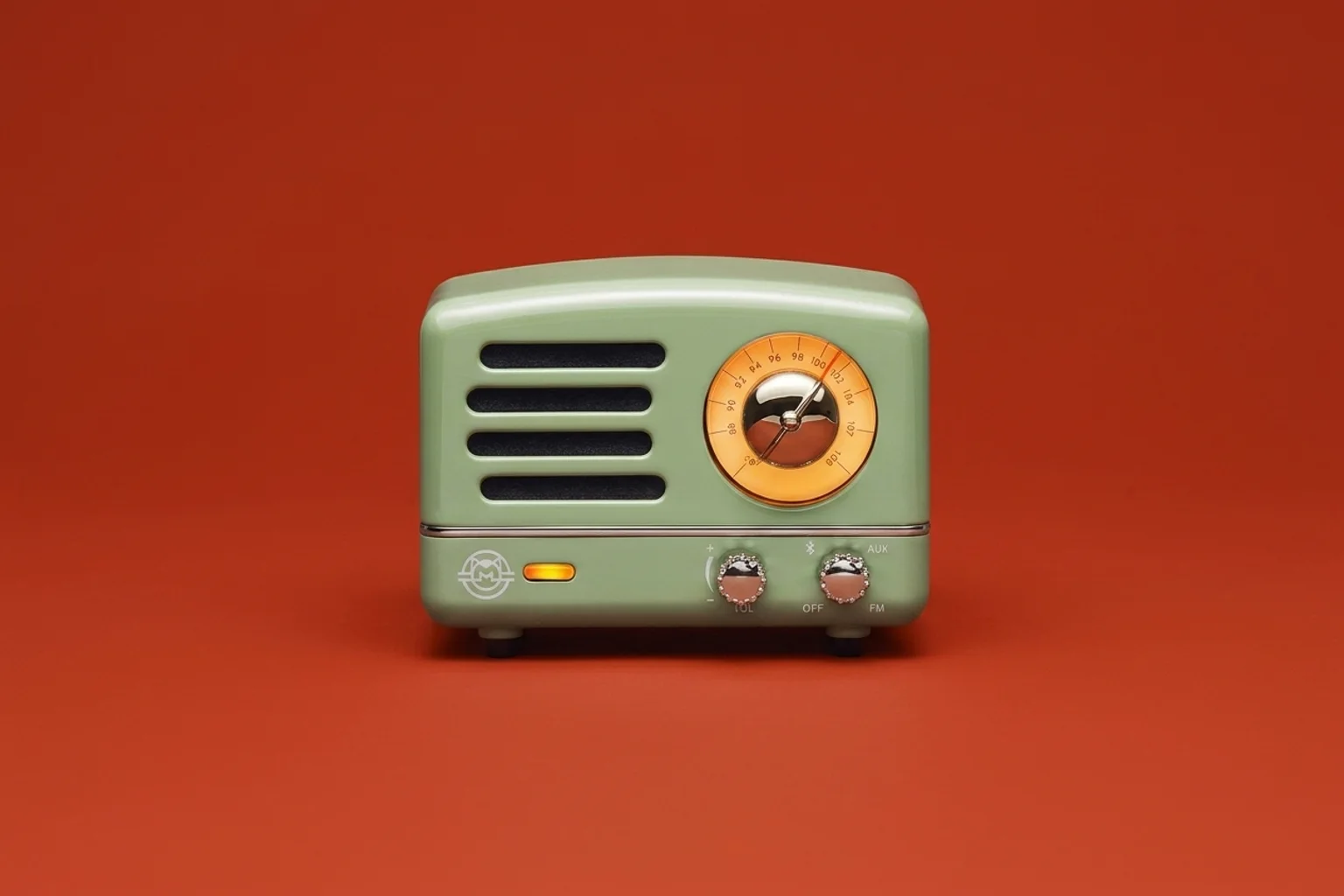
It looks like a 1964 transistor radio someone kept in mint condition for sixty years — a single block of polished metal, an amber tuning dial that glows, and a tactile heft that makes cheaper speakers feel like toys. The MUZEN OTR Metal is unapologetically a statement object first and a speaker second. So the real question isn't "is it pretty" (it is) — it's whether the sound and the price hold up once the nostalgia wears off. Short version: for the right buyer it's a genuinely lovely thing that sounds clean and fills a room, but you're paying a design premium and the deep bass isn't there. This is a researched review built from MUZEN's published specs, independent pro reviews, and aggregated owner feedback — not our own lab test — and I'll flag exactly where the marketing and the reality part ways. For the wider field, see our best retro Bluetooth speakers roundup, where the OTR Metal sits among its rivals.
- The verdict: a beautifully built, room-filling retro speaker with clear vocals — but it's a design buy, not an audiophile one, and it costs more than its size suggests.
- Who it's for: people who want a speaker that doubles as decor or a gift, value a real FM radio, and care more about looks and clarity than chest-thumping bass.
- The catch: limited deep bass (small enclosure), no official water-resistance rating, and a price that drifts around $95–$110 — well above generic Bluetooth speakers and the cheaper retro clones.
MUZEN OTR Metal — the scorecard
-
Design & build95/100ExcellentA single piece of zinc alloy with a glowing analog dial — reviewers and owners agree it feels far more expensive than it is.
-
Sound quality75/100GoodClear, present vocals that fill a room louder than the size implies — but the small sealed body can't do deep bass, whatever the marketing says.
-
Features85/100GreatA real hand-tuned FM radio plus Bluetooth 5.0, aux in and USB-C — it works with no phone, no app, no account.
-
Value80/100GoodAt $94.99 it undercuts the big retro names while out-charming them — just know you're paying for design, not sound-per-dollar.
The Good — what owners keep praising
- Single-piece zinc-alloy build that feels far more expensive than the price
- A real FM radio with a glowing hand-tuned dial — no phone, app or account needed
- Clear, present vocals that fill a room louder than the size implies
- Ships in a retro suitcase box, so it arrives gift-ready
- Modern basics done right: Bluetooth 5.0, aux in, USB-C charging
The Bad — the gripes that repeat
- Deep bass isn't there — small-enclosure physics; the "bass-heavy" marketing oversells it
- No published water-resistance rating: an indoor speaker, full stop
- A repeated owner gripe: printed dial markings can sit slightly off the real frequency
- Price drifts between $95 and $110 — a design premium, not a bargain
- Single driver, so no true stereo separation
Design & build
This is where the OTR Metal earns its keep. The body is a single piece of solid zinc alloy, and you feel it the moment you pick it up — it's heavy for its footprint, with no creak or rattle. MUZEN lists it at about 436 g (just under a pound) for the speaker alone, in a compact 88 × 65 × 56 mm shell (roughly 3.5 × 2.6 × 2.2 inches). So it's pocketable in a jacket, but it sits on a shelf or kitchen counter like a little ingot, not a gadget.
The front is dominated by the amber analog tuning dial — a real, glowing window you sweep across the FM band — and the whole thing is finished in an enameled retro colorway (black, red, blue, green or pink). Independent reviewers describe it as "very well made" and "cute as a button," and the photos don't oversell it. It ships in a retro suitcase-style box, which is a small thing that matters a lot if you're buying it as a present: it looks like a gift before you've even opened it. The trade-off for all that metal is that there's no rubberized splash protection and no stated IPX rating, so this is a living-room and desk speaker, not a poolside one.
Sound: clarity over bass
Here's the honest read, and it's the most important section. The OTR Metal drives a single 40 mm neodymium full-range driver at 5 W over Bluetooth (2 W in FM mode). For its size, the result genuinely surprises people — it goes louder and cleaner than you'd expect from something this small, and vocals, acoustic guitar and spoken-word (podcasts, radio) come through crisp and present. That's its sweet spot: clarity and room-filling volume.
What it is not is a bass machine, no matter what the product page says. MUZEN markets "seriously bass-heavy sound" and "massive lows" — and that's the one place the marketing and reality diverge. A small sealed alloy enclosure simply can't move enough air for deep, physical bass, and independent reviewers and owners say so plainly: you'll clearly hear basslines and low-end instruments, but you won't feel them in your chest, and at least one owner flagged a thin mid-range. Translated to real life: it's lovely for jazz, folk, talk radio and background music at a dinner; it's underwhelming if you want hip-hop or EDM to thump. Buy it knowing that, and you won't be disappointed. Buy it expecting a subwoofer in a metal box, and you will be.
As an FM radio
This is the feature that actually sets the OTR Metal apart from the sea of generic Bluetooth speakers — it's a working FM radio (87–108.5 MHz) you tune with that physical amber dial, no phone required. There's something genuinely pleasant about sweeping the dial to find a station, and it means the speaker keeps doing its job during a power cut, a phone-free morning, or anywhere streaming is patchy. FM runs at a lower 2 W, so it's a touch quieter than Bluetooth, but it's perfectly listenable.
The one wrinkle worth knowing: more than one reviewer has noted the printed dial markings don't always line up precisely with the real frequency — the station at, say, 101.5 might land nearer 105 on the dial. It still tunes the station fine; you just learn the dial's quirks rather than trusting the numbers. For a tactile, nostalgic radio that's a minor annoyance, not a dealbreaker — but if you want lab-precise digital tuning, this isn't that.
Battery & connectivity
MUZEN rates the OTR Metal at up to 10 hours of playback on a charge (measured at 65% volume), charged over USB-C — a welcome modern touch on a deliberately old-looking product. Crank the volume and you'll see less; sit it at background levels and you'll get through a long day. MUZEN doesn't publish separate Bluetooth-vs-FM battery figures, so treat 10 hours as the Bluetooth ceiling and assume FM is broadly similar.
Connectivity is Bluetooth 5.0 for wireless, plus the built-in FM tuner; many listings also cite an AUX input for a wired source. There's no Wi-Fi, no multi-room, no app and no voice assistant — and honestly, that's on-brand. This is a grab-and-play object, not a smart speaker, and the lack of an app is a feature if you're tired of accounts and firmware updates.
Who it's for / who should skip it
Get it if you want a speaker that looks like a design piece on a shelf, you'd actually use a real FM radio, you're buying a memorable gift (it earned the "best unwrap" slot in our retro tech gift guide), and your music leans toward vocals, acoustic, jazz or talk rather than bass-heavy genres. The build quality and the looks are the product, and on those it delivers.
Skip it if you're chasing bass or maximum loudness for a party, you want a rugged waterproof speaker for the beach or shower, or you simply want the most sound per dollar — a plain plastic Bluetooth speaker will out-thump it for a third of the price. The OTR Metal is a want, not a value buy, and that's fine as long as you know which one you're making.
How it compares
The OTR Metal lives in the small-but-premium corner of the retro speaker market, and the right alternative depends on what you're optimizing for. We rank it against the field in our best retro Bluetooth speakers guide, but the short version:
If your priority is bass and a bigger, more "hi-fi" retro look, a Marshall portable (the Emberton or Willen, depending on size and budget) will move more air and hit harder — though it trades the FM radio and the polished-metal novelty for a roadie-amp aesthetic. If you want the warm, woodgrain tabletop-radio vibe with arguably richer tone, Tivoli Audio's Model One line is the classic call, but it's larger, pricier and built to live on one surface rather than travel. The OTR Metal's pitch against both is specific: it's the most pocketable, the most overtly vintage transistor in look, and it pairs a genuine FM dial with a giftable suitcase — at a price that undercuts those bigger names while accepting their bass advantage. Pick the OTR Metal for portability, charm and the radio; pick a Marshall or Tivoli when sound output is the point. Inside MUZEN's own lineup, the $30 OTR Sticker shrinks the same retro face into a fridge-magnet micro speaker — it anchors the budget end of our magnetic Bluetooth speakers guide.
Frequently asked questions
Is the MUZEN OTR Metal a real FM radio, or just Bluetooth?
It's a genuine FM radio (87–108.5 MHz) you tune with the physical amber dial — no phone or app needed — as well as a Bluetooth 5.0 speaker. That working radio is the main thing that separates it from a generic Bluetooth speaker. Note that some owners find the dial markings don't line up exactly with the actual frequency, so you may tune by ear rather than by the printed numbers.
Does it have good bass?
No — and this is the honest catch. The small sealed alloy enclosure can't produce deep, physical bass, despite MUZEN's "bass-heavy" marketing. You'll hear basslines clearly, but you won't feel them. Its real strength is clear vocals, treble and room-filling volume for its size, which suits acoustic, jazz, podcasts and radio far better than hip-hop or EDM.
How long does the battery last?
MUZEN rates it at up to 10 hours of playback on a single charge, measured at 65% volume, recharged over USB-C. Expect less at high volume and roughly all-day life at background levels. MUZEN doesn't publish a separate FM-only figure, so treat 10 hours as the Bluetooth ceiling.
Is the OTR Metal waterproof?
MUZEN does not publish a water-resistance (IPX) rating for the OTR Metal, and there's no rubberized seal on the body. Treat it as an indoor speaker for shelves, desks and kitchens — not one for the shower, pool or beach. If you need a rugged waterproof speaker, look elsewhere.
How big and heavy is it?
It's compact — about 88 × 65 × 56 mm (roughly 3.5 × 2.6 × 2.2 inches) and around 436 g (just under a pound) for the speaker itself. It's small enough to carry but feels dense and substantial because of the solid zinc-alloy body, which is a big part of its appeal.
Is it worth it versus a cheaper retro-look clone?
If you only care about the look, no — there are cheaper plastic speakers with a vintage style. What you pay extra for here is the real single-piece metal build, the working FM radio with an analog dial, the gift-ready suitcase packaging, and a CES Innovation Award honoree's design. If those matter to you, it justifies the ~$95–$110 price; if you just want sound per dollar, it doesn't.
Bottom line: the MUZEN OTR Metal is one of the nicest-looking small speakers you can put on a shelf, and it backs the looks up with clear sound, real FM radio and a build that feels like money. Just go in clear-eyed — it's a design-led want with limited deep bass and a premium price, not the loudest or cheapest speaker for the money. Buy it for the charm, the radio and the gift factor, and it's an easy 8.4. Buy it for bass, and you'll wish you'd read this first.