
Disclosure: This guide has affiliate links — if you buy through one we may earn a small commission at no extra cost to you. Our picks are our own. Full disclosure. This is buying advice, not medical advice — for therapy questions, ask your physician or equipment provider.
Short answer: yes — a 288Wh power station will run most CPAPs for a full night, but only with the humidifier off. Turn the heated humidifier on and 288Wh won't make it to morning. That one setting is the whole story, and it's why "will it run all night?" doesn't have a single yes/no answer — it depends on your machine and how you run it. Below is the actual watt-by-watt math so you can size a battery to your night instead of guessing. If you just want the unit, a 288Wh class like the Anker SOLIX C300X or Jackery Explorer 300 Plus is the right size for one humidifier-off night; for a humidified night with margin you want more capacity, which we cover in our best power station for CPAP guide.
- A CPAP uses far less than people think. A ResMed AirSense 10 draws about 7W with the humidifier off — roughly 53Wh over an 8-hour night.
- The humidifier changes everything. Humidifier on ≈ 22W; add the heated tube and it's ~34W — a 3–5× jump that decides whether 288Wh is enough.
- 288Wh, humidifier off ≈ a full night and then some (~8 hours at 30W, more for a lower-draw machine). 288Wh with the heated tube on ≈ under one night.
- You only get ~80–85% of the rated watt-hours through the AC outlet — inverter and battery losses. Running on a 12V DC cable reclaims most of that.
How many watts does a CPAP use?
Less than almost anything else you'd plug into a power station — that's the good news. A CPAP is a small blower motor, and at typical pressures it sips power. The numbers people fear come from the machine's nameplate rating (a ResMed AirSense can list a peak over 1,000W), but that's the absolute ceiling for a cold-start with full heating, not what it actually pulls while you sleep.
Here's what a ResMed AirSense 10 — one of the most common machines — really draws, from ResMed's own figures:
- Humidifier off: about 7W (~56Wh over 8 hours)
- Humidifier on: about 22W (~176Wh over 8 hours)
- Humidifier + heated tube: about 34W (~272Wh over 8 hours)
That's the single most important table on this page. The blower barely registers; the heating — warming the water and the air in the tube — is what eats your battery. Going from humidifier-off to fully-heated is roughly a 5× increase in draw on the same machine.
Your machine matters too. A Philips DreamStation 2 is unusually frugal (~5.5W with humidification off). A newer ResMed AirSense 11 is thirstier — around 56W typical, up to ~73W — and it uses a proprietary connector with no native battery port, which complicates DC power. If you don't know your machine's draw, the AirSense 10 numbers above are a reasonable middle-of-the-road planning baseline. When you can, measure it with a cheap inline watt meter for a night to get your real figure.
So will 288Wh actually get you through the night?
Now the math. You never get the full rated capacity out of a battery — through the AC outlet you lose 15–20% to the inverter and battery management, so a "288Wh" unit delivers roughly 230–245Wh of usable energy. Divide that by your machine's draw and you get hours of runtime. At an 8-hour night:
| Machine / setting | Draw | Runtime on 288Wh (AC) | All night? |
|---|---|---|---|
| DreamStation 2, humidifier off | ~5.5W | ~40+ hrs (several nights) | ✅ Easily |
| AirSense 10, humidifier off | ~7W | ~35 hrs (~4 nights) | ✅ Easily |
| Typical machine, humidifier off | ~30W | ~8 hrs | ✅ One night |
| AirSense 10, humidifier on | ~22W | ~11 hrs | ✅ One night, tight |
| AirSense 10 + heated tube | ~34W | ~7 hrs | ⚠️ Falls short |
| AirSense 11, typical | ~56W | ~4.4 hrs | ❌ Half a night |
This lines up with the one manufacturer that publishes a CPAP figure: Jackery rates its 288Wh Explorer 300 Plus at ~8.1 hours for a 30W CPAP and ~4.7 hours at 40W — right in step with the math above. So the verdict: 288Wh comfortably runs a humidifier-off CPAP all night, often for several nights on a low-draw machine. Switch on full heating, or run a thirsty AirSense 11, and 288Wh isn't enough — you'll want 500–768Wh or more. Plan around your row in that table, not the best case.
How to stretch a 288Wh battery to a full night
If 288Wh is what you've got, three moves get you the most out of it.
Run the humidifier dry — or off. This is the biggest lever by far. Leaving the heater off (you can keep water in the chamber for passive, unheated humidification) drops a ResMed AirSense 10 from ~22–34W back toward ~7W, turning one tight night into several. Many campers accept slightly drier air as the trade for not waking up to a dead machine. In cold weather, a heated tube also fights hose condensation, so weigh comfort against runtime for your conditions.
Power it from DC, not the AC outlet. Your CPAP runs on DC internally, so the AC outlet does a lossy DC→AC→DC round-trip. Use a 12V DC cable matched to your machine and you reclaim 15–30% of the battery — often the difference between making it to morning and not. ResMed AirSense machines need a model-specific DC converter (often around $300), so check that a DC option exists for yours before counting on it.
Disable eco mode. A CPAP idles below ~10W between breaths, and many power stations read that as "nothing's plugged in" and shut the outlet off mid-night. Turn off the eco/auto-shutoff setting before you rely on the unit, or keep a small dummy load plugged in to hold the outlet awake. Test it for a full night at home first — this is the failure people only discover at 3am.
The right-sized 288Wh picks
If a single humidifier-off night is your use case, these two are the sensible 288Wh units — both pure sine wave, both safe for a CPAP.
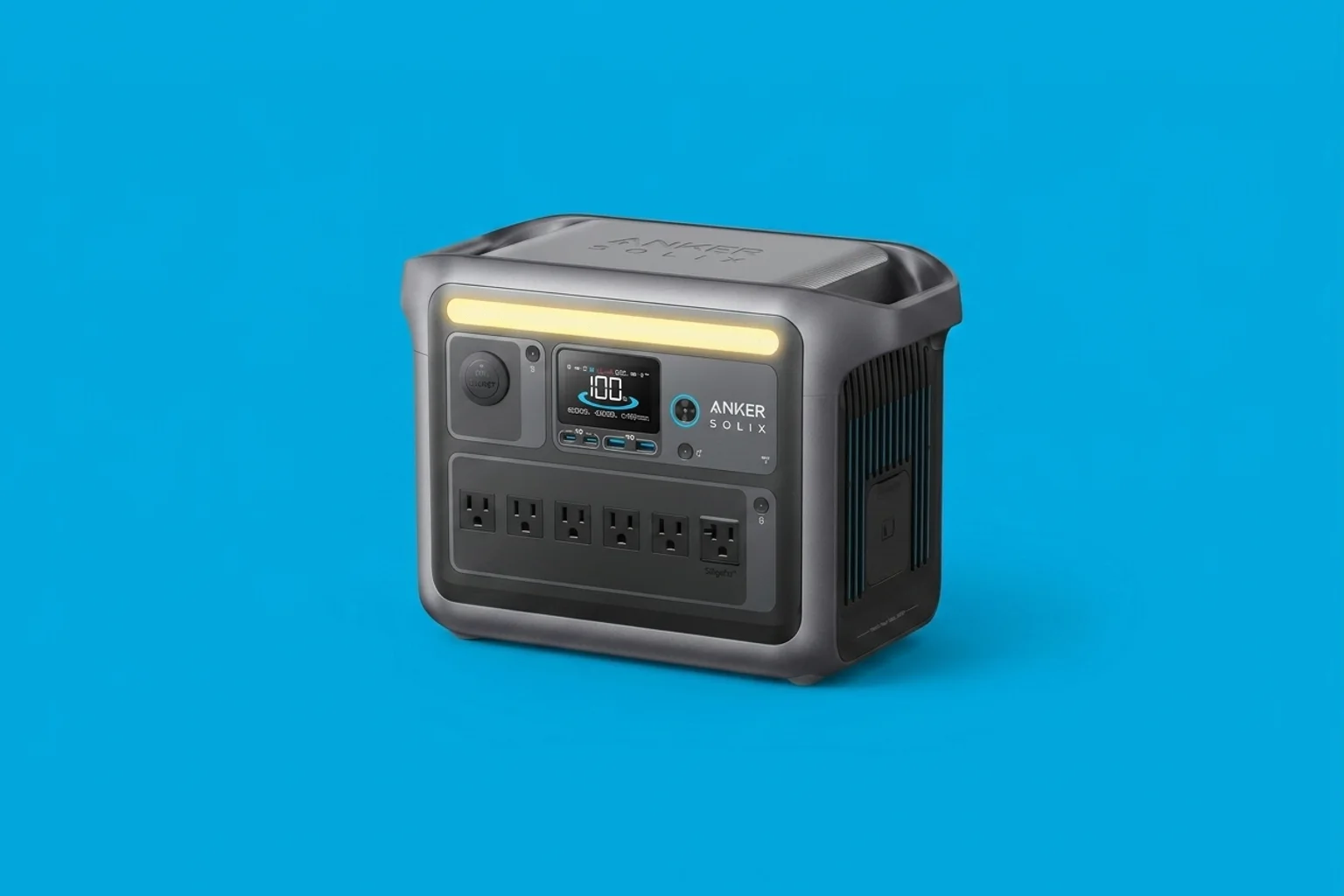
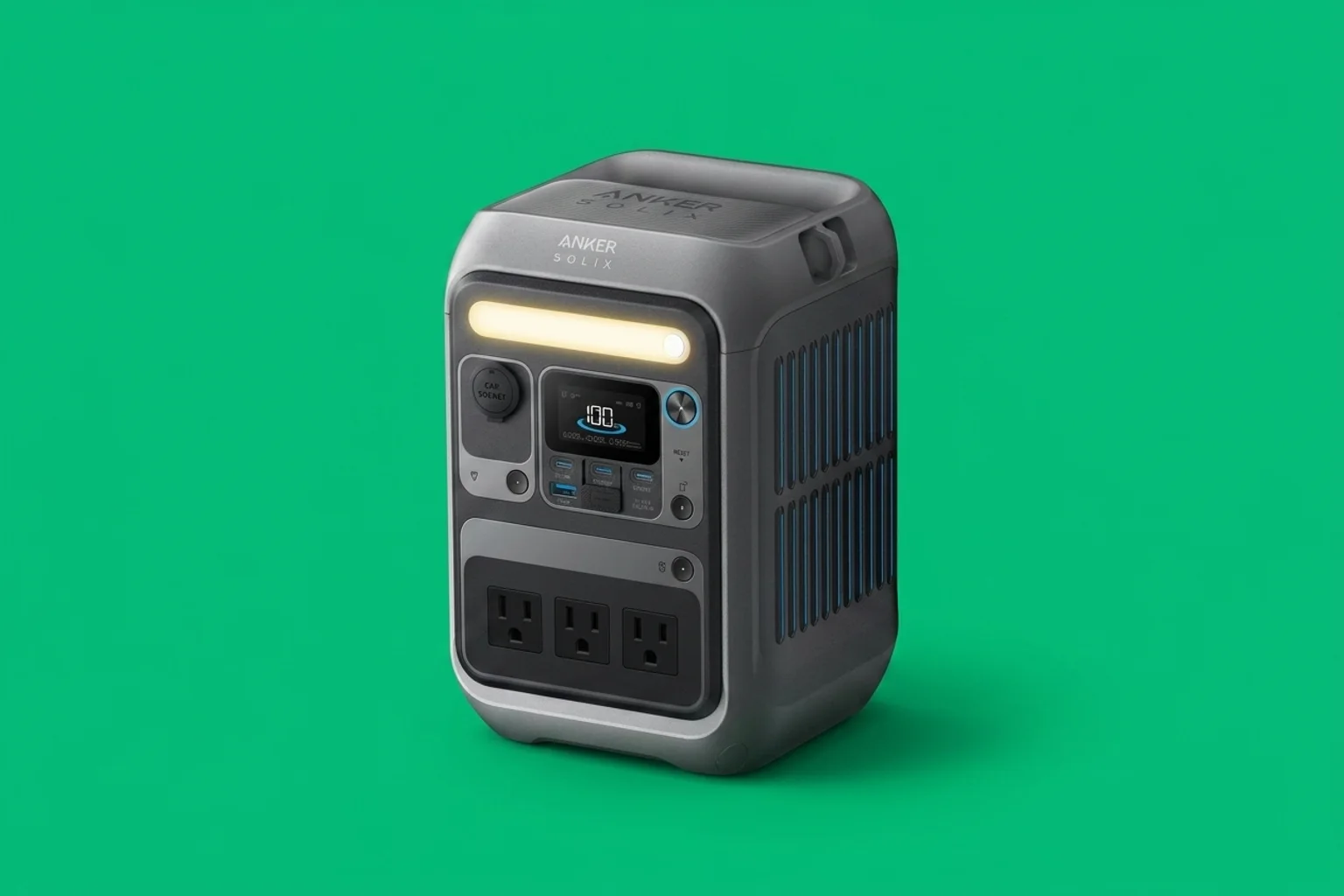
Anker SOLIX C300X (AC)
Near-silent at 25 dB, with a ~10ms UPS and a 140W USB-C port — about one humidifier-off night. Get the "AC" model; the C300 DC Power Bank has no inverter and can't run a wall-plug CPAP.
Check price at Anker →Jackery Explorer 300 Plus
The one unit whose maker states the CPAP runtime — ~8.1 hrs at 30W, ~4.7 hrs at 40W. Light, quiet silent-charging mode, pure sine; uses EPS rather than a true zero-gap UPS.
Check price on Amazon →Need a humidified full night, or run an AirSense 11? Skip 288Wh and size up — the 768Wh Anker C800 or the 1,024Wh C1000 are the next steps. We rank the whole range in the best portable power station for CPAP guide.
How many watts does a CPAP use?
With the humidifier off, a typical CPAP draws about 5–30W — a ResMed AirSense 10 is around 7W. Turn the heated humidifier on and it rises to ~22W; add the heated tube and it's ~34W. A newer ResMed AirSense 11 is thirstier at ~56W. The blower itself uses very little; the heating is what drives the number up. Your machine's nameplate "peak" wattage (sometimes over 1,000W) is not what it draws while you sleep.
How much power does a CPAP use in 8 hours?
For a ResMed AirSense 10: about 56Wh over 8 hours with the humidifier off (~7W), ~176Wh with the humidifier on (~22W), and ~272Wh with the humidifier and heated tube (~34W). That's why a 288Wh battery comfortably covers a humidifier-off night but barely covers a fully-heated one — and why turning the heater off is the single best way to extend runtime.
Will a 288Wh power station run a CPAP all night?
With the humidifier off, yes — about 8 hours at a 30W draw, and several nights for a low-draw machine like a DreamStation 2. With the heated humidifier and tube on (~34W), 288Wh gives roughly 7 hours, so it falls just short of a full night. For a thirsty AirSense 11 (~56W) it lasts only about 4–5 hours. If you need a humidified full night, choose a 500–768Wh or larger unit instead.
Why do I only get ~80% of the rated watt-hours?
Running through the AC outlet, a power station loses 15–20% of its rated capacity to inverter conversion and battery-management overhead, so a "288Wh" unit delivers roughly 230–245Wh to your device. You reclaim most of that loss by powering the CPAP from a 12V DC cable instead of the AC outlet, since the CPAP runs on DC and skips the conversion. Always size with the usable figure, not the sticker number.
Does running the CPAP on DC really save battery?
Yes — typically 15–30% more runtime. The CPAP uses DC internally, so feeding it the power station's AC output wastes energy on a DC→AC→DC conversion. A 12V DC cable matched to your machine skips that loss. The caveat is that ResMed AirSense machines need a proprietary DC converter (often ~$300), so confirm a DC solution exists for your exact model; many travel and Philips machines accept DC more easily.
Bottom line: a CPAP is a low-draw device, so 288Wh runs one comfortably all night — as long as the humidifier is off. The heater is the variable that decides everything: it can push a 7W machine to 34W and turn four nights of runtime into less than one. Match the battery to your real draw, run the humidifier dry, power it on DC where you can, and kill eco mode before you trust it. Want the full lineup by use case? Start with our best portable power station for CPAP guide.